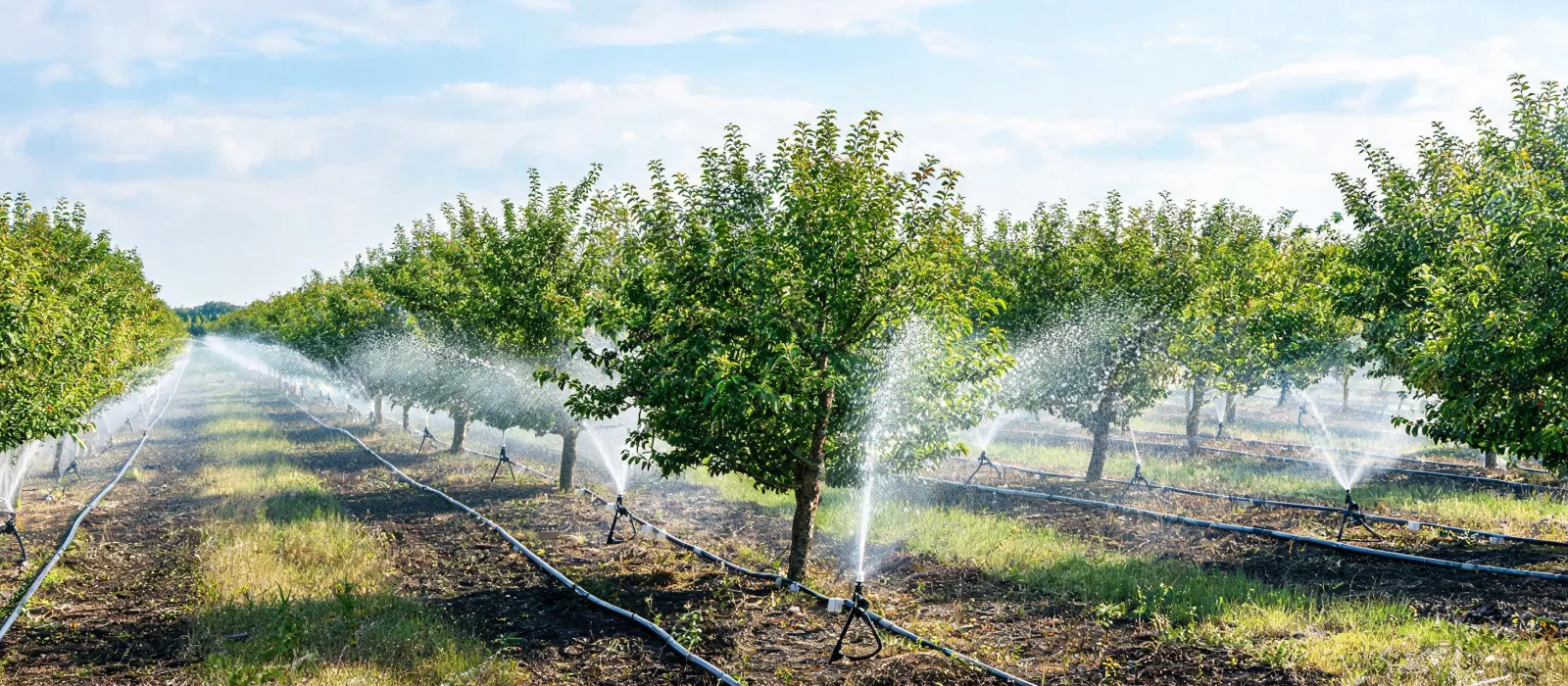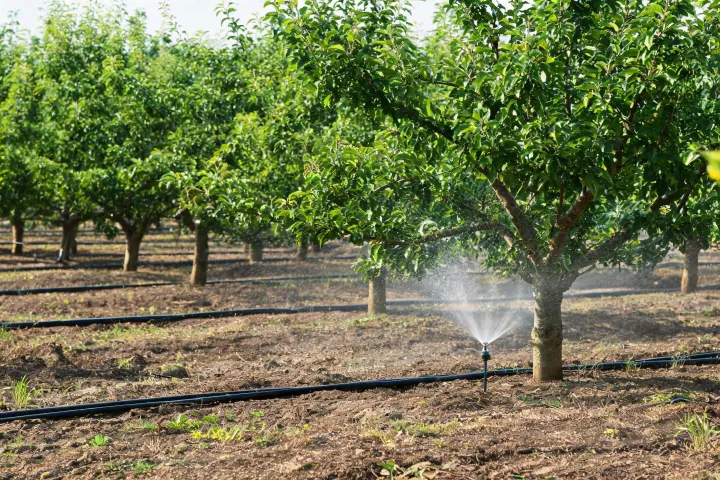
Orchard blocks
State tree spacing, canopy size, soil conditions and the intended wetted area. Measure available pressure during operation, then ask for discharge and diameter at the proposed mounting height. Row length and elevation affect the comparison; a head specification alone cannot establish block uniformity.
Illustrative purchasing situation: an orchard replaces damaged heads while retaining its laterals. Record the connection and installed nozzle, request separate substitute data, and review a sample fit before approving the replacement. The result sought is a documented compatible scope, not a claimed yield improvement.
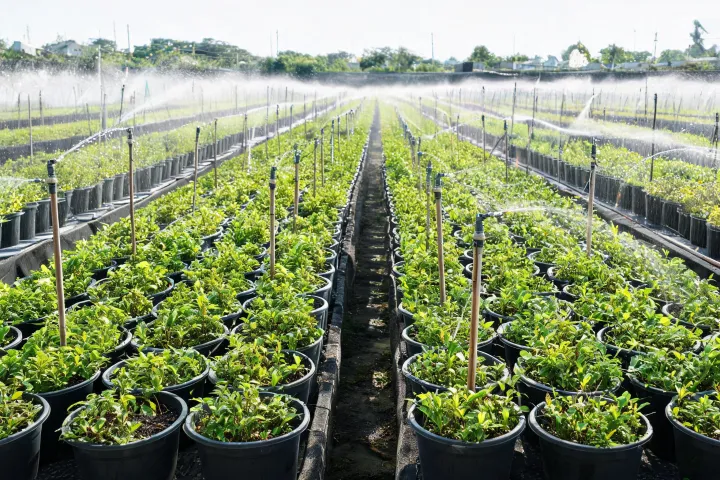
Container nurseries
Supply container dimensions, spacing, bench or ground arrangement and watering schedules. Compare spray pattern against container position rather than selecting the widest stated diameter. Wind exposure and interception by foliage can change distribution; ask the designer how those conditions will be assessed.
Filters and flush points matter when source-water particles may obstruct small passages. Request the manufacturer's filtration recommendation for the exact head. An inexpensive nozzle with frequent cleaning may create a different labor and spare-parts budget from a higher-priced assembly.
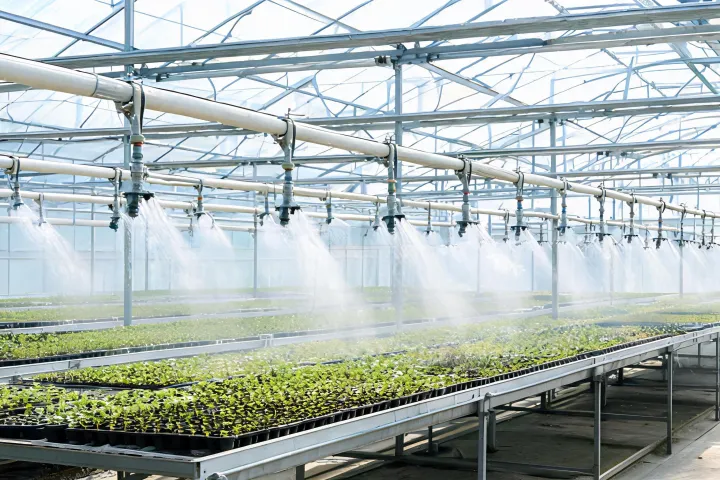
Protected propagation areas
Distinguish irrigation from humidity-control duties. Specify crop sensitivity, permissible leaf wetting, mounting clearance and water source. Fertigation adds compatibility and flushing questions; confirm the chemical exposure and operating concentration with the proposed supplier rather than assuming every polymer is suitable.
Micro sprinklers distribute water across an area, while drip irrigation targets individual delivery points. Drip may suit root-zone control but still needs filtration and maintenance; wider spray can suit coverage tasks while introducing wetting and wind constraints. A center pivot serves a different field-scale layout and cannot be judged by head price alone.